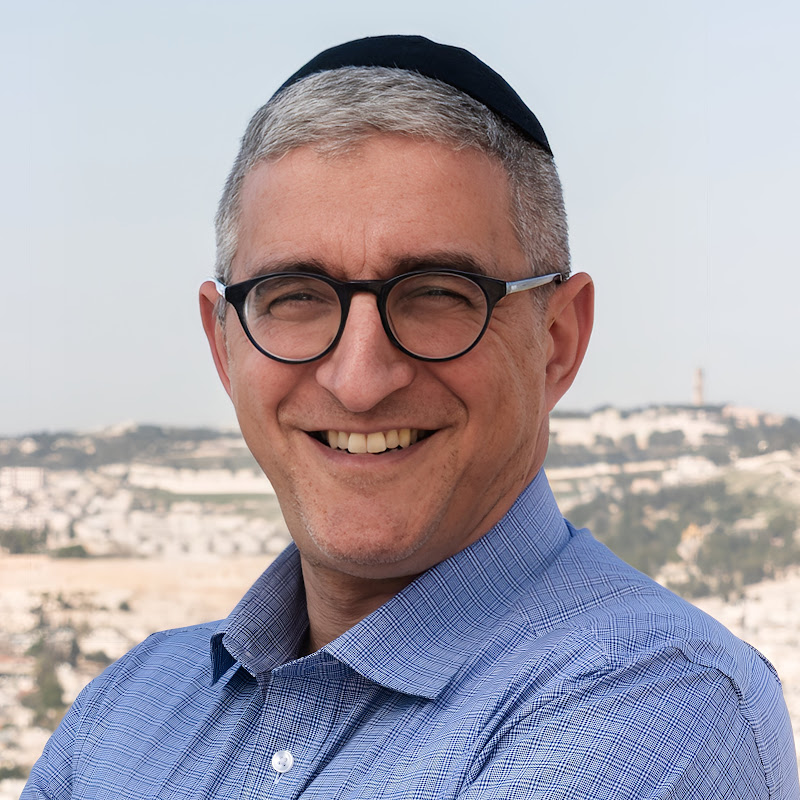
Transcript [00:00] Pisak WKI is here with us. Uh he is an [00:03] opinion writer for both the Jerusalem [00:05] Post, Israel 365. He's over on Real [00:08] America's Voice as well. So we thought [00:10] what perfect time to pick his brain than [00:12] right now since we are getting prepped [00:14] to take a trip to Israel as a show as we [00:16] speak. So my friend, it's it's good to [00:17] connect with you again. How are you? [00:19] >> I'm doing well. I'm actually in [00:21] Nashville right now. I'm going to be [00:22] attending the National Religious [00:23] Broadcasters Convention. Uh you know, I [00:26] do a lot of Jewish Christian Relations [00:28] work. So, we're here to to hang out with [00:30] our Christian brothers and sisters. [00:32] >> So, right now, I know you your most [00:34] recent piece or one of your most recent [00:35] pieces for the Jerusalem Post was kind [00:37] of analyzing the way Trump this kind of [00:40] dance uh that Trump is doing with Iran. [00:42] Well, I want him to make a deal, but do [00:44] I really want to make a deal? Right. And [00:45] I was just telling our team, listen, [00:47] man. I mean, I think we have a you know, [00:48] one of our aircraft carriers not within [00:50] striking distance of Iran as we speak. [00:51] There's a a nonzero chance, all right, [00:54] that daddy may take his belt off on the [00:56] Ayatollas while we're over in Israel. [00:58] Okay. So, what is that chance, do you [01:00] think? I know that the president just [01:01] said that he's given him about a 30-day [01:04] deadline about a week ago and and I and [01:06] I do not apologize for the very first [01:08] question here being entirely self- [01:09] serving. Pisak, so you tell you tell us [01:11] what are the chances. [01:12] >> Well, first of all, if something happens [01:14] while you're in Israel, trust me, Israel [01:17] is a lot safer than you realize. It's [01:19] certainly much more it's much safer than [01:20] a lot of American cities are. Uh so [01:23] you'll be just fine and you know I'll be [01:25] happy to you know help you find a safe [01:27] place to be if something happens while [01:28] you're there. You'll actually uh you'll [01:30] experience firsthand the you know the [01:32] resilience and the joy that the Israeli [01:34] people have even as we go through [01:36] >> we'll get the true authentic experience. [01:37] Right. Is that what you're saying that [01:38] what it really means to be in Israel on [01:40] a daily basis [01:41] >> treatment? Yes. [01:43] Um but you know in terms of what you [01:45] said about uh you know about Trump about [01:47] the chances of attack uh it's not just [01:49] one aircraft carrier there's a second [01:51] one the the bush is on its way over [01:53] there now the amount of you of military [01:55] assets that are being amassed there uh [01:58] are quite significant and and notably [02:00] the US has been installing um THAAD uh [02:05] anti- anti- anti-aircraft and anti- and [02:08] anti-bballistic missile defenses right [02:11] around its bases. all over the Middle [02:13] East. So, it it it really seems that [02:15] this is not just uh you know, flexing [02:17] muscles and talking trash. There really [02:19] seems to be a lot of planning for for [02:22] kinetic action against the Iranian [02:24] regime. What's more, after President [02:26] Trump said to the Iranian people, "Help [02:27] is on the way." And that encouraged them [02:29] to go out into the streets in much [02:31] greater numbers, it is without question, [02:33] and I'm not saying this as an indictment [02:35] of him, but without question, had Trump [02:37] not said that, far less Iranians would [02:40] have been killed. We know this because [02:41] of the way past rounds of protests. [02:44] Every few years, mass protests in Iran [02:46] flare up. A few people get killed and it [02:48] all dies down pretty quickly. And we saw [02:52] massive numbers of people being [02:53] slaughtered by the regime. And they were [02:55] emboldened. Uh they were emboldened by [02:57] what President Trump said. Uh I [03:00] personally and through channels I have [03:01] in Israel monitor very closely what [03:03] happens in Iranian social media that you [03:06] know that leaks out. and they were and [03:08] they there's kind of a feeling of of [03:10] possibly being betrayed by Trump if [03:13] there if the regime is not attacked at [03:15] this point. Uh so I think the chances of [03:18] kinetic action are very high if Trump [03:20] goes down in history as having thrown a [03:21] lifeline to the regime by uh you know by [03:24] cutting some sort of deal where they get [03:26] to keep their heads down until he leaves [03:28] office and then they're still in power. [03:30] Uh it's not going to do well for his [03:32] legacy. So I think the chances of [03:33] kinetic action are actually uh much [03:36] higher than people think. [03:38] What takes? Let's say this occurs. This [03:41] is what we discussed on our show quite [03:44] prevalently when those demonstrations [03:47] were at their house and all over social [03:49] media, right? And and what we speculated [03:52] was if there was somebody that we [03:54] thought could rule and subdue that [03:57] nation with that power vacuum, chances [04:00] are help would have been on the way. But [04:03] maybe that's where there is real doubt [04:04] is what takes the place of the [04:07] Ayatollas, right? And [04:10] that's my question to you then. What [04:12] takes the place? What's prepared to lead [04:14] and govern that country and not have it [04:17] for example? I mean, as you know, we got [04:18] ISIS because they thought that, you [04:20] know, al-Qaeda wasn't radical enough. [04:22] Okay. So what what's to stop that place [04:25] from splintering um uh from it becoming [04:28] a a beach head for you know now we get [04:30] an even more radicalized state uh [04:33] because someone cannot unite the people [04:35] and govern them. What takes the place [04:36] there? [04:38] >> Okay, there's a lot of questions in your [04:40] question. Uh but let's start with the [04:41] fact that uh with one of the last things [04:43] you said. What prevents this from [04:45] becoming more radicalized? So, I can't I [04:48] I'm not going to play prophecy and I [04:50] can't tell you who exactly would replace [04:52] the regime if and when it falls, but but [04:54] let's just educate your audience. [04:57] Iran is very different than every other [05:00] Muslim country in the Middle East in a [05:02] number of important ways. First of all, [05:05] the Iranian people are not that Muslim. [05:08] It has Iran has the lowest rate of [05:10] mosque attendance of any officially [05:14] Muslim country. And also it is not an [05:16] Arab country, right? [05:17] >> And without uh you know I don't know I [05:19] know I can be pretty politically [05:21] incorrect on your show but let me just [05:22] say it this way. [05:23] >> The Iranians are Persians. That's very [05:25] different culturally than Arabs. They [05:27] are highly educated. They're very [05:29] secular. They're very pro-western. This [05:32] is not Libya or Iraq or Syria. that if [05:36] the regime, which is one little mafia [05:38] family, gets removed, then it then it [05:40] splinters into a bunch of jihadist [05:42] groups in their pajamas and sandals [05:43] running around with AK-47s. That is not [05:46] the situation in Iran. We're talking [05:47] about again a very educated, fairly [05:50] westernized country. If you think back [05:52] before 1979, before the revolution, this [05:55] was a very cosmopolitan, pro-western, [05:57] highly educated population. Um, and [06:01] they're very pro-democratic, meaning the [06:03] people, let's put it this way, the [06:04] people in the streets for the Arab [06:06] Spring in places like like Libya and and [06:10] Egypt and Syria going back to that to [06:13] that time were Islamists. The people in [06:15] the streets of Tehran are secular [06:18] pro-western. [06:20] >> Okay? It's a very different type of [06:21] country. uh and and that you don't have [06:25] all sorts of jihadist militias in the [06:27] you know in the in the hinterlands of [06:30] Iran the way you have that in other in [06:32] other Middle Eastern countries. So [06:36] there there could certainly be chaos [06:38] when if and when the regime falls. But [06:40] it [06:42] not all regime changes are the same. So [06:45] the Iranian I actually have a lot of [06:47] hope that it if and when the regime [06:48] falls that uh it will be replaced by [06:51] something that is pro-western because [06:52] that's because again that's where the [06:54] population is. What I think is most [06:56] likely to happen is that a lot of the [06:58] people running the show will remain in [07:00] power and there that some second or [07:03] third level bureaucrats will overthrow [07:05] the top mullers because secretly a lot [07:08] of them are actually quite secular. So [07:10] exactly what the regime change will look [07:11] like I don't know and it's not the [07:13] responsibility of the west of the [07:14] Americans of the Israelis to figure out [07:16] the regime change because regime change [07:19] can only happen from within. Even all [07:20] the bombing America will do cannot bring [07:23] down the regime. They can create the [07:25] conditions where the regime is so weak [07:27] that the people then rise up and bring [07:29] it down. Uh but what that looks like uh [07:32] is is not going to be the responsibility [07:35] uh and of of the west you know going in [07:37] there. But again, there's really no [07:39] chance of a kind of splintering like [07:41] you're picturing in other Middle Eastern [07:43] countries. Again, there will be chaos. [07:45] Let me just also add, Steve, this is a [07:47] very important point. Um, in in Muslim [07:50] culture and in other Middle Eastern [07:51] cultures that are sort of, you know, [07:53] quasi Muslim even, 40 days after death [07:57] is the end of the official first stage [07:59] of the morning period. And traditionally [08:02] with political deaths at the on the [08:04] 40-day mark after the after the death [08:08] there is a kind of it's almost like a [08:09] second funeral. And in the Masa Amini [08:13] protests in 2022 when that young girl [08:16] who wasn't wearing a hijab was taken [08:17] into custody and then killed in custody [08:19] which led to widespread that was the [08:21] last mass protests uh in Iran. They [08:24] broke out in a mass way on the 40th day [08:27] after her after she was killed. The [08:29] 40-day mark after January 8th and 9th [08:32] when the lion's share of the slaughter [08:35] of of Iranian civilians took place is [08:38] coming uh tomorrow and the next day. And [08:41] they've already called the those who who [08:44] led these protests. These protests were [08:46] started by the by the bazaar shop owners [08:49] uh who who really were the engine that [08:52] drove this whole round of protests that [08:54] were still, you know, that we're still [08:55] in the aftermath of. They've called for [08:57] a national strike tomorrow and the next [09:00] day and for people to come out into the [09:03] streets on Thursday and we could be [09:05] seeing another round of this with people [09:08] pouring out into the streets and then [09:10] the Iranian regime will even more under [09:12] the microscope of Trump and his people [09:14] be really put to the test of whether or [09:16] not they open fire on their people [09:17] again. So, we're actually in the calm [09:18] before the storm in a number of [09:20] different ways. [09:22] Let's let's test your your your analysis [09:25] and retcon it in the opposite direction [09:27] then. How how has the Iranian regime [09:30] then been able to hold on to power for [09:32] as long as it has? [09:35] >> Well, it's uh it's a very sophisticated [09:38] regime and it it has it it it it [09:41] partially has to do with the culture [09:42] that I just mentioned. if it was ruling [09:45] over a whole bunch of Sunni militias [09:47] like a you know like the Afghanistan or [09:49] Iraqi population it it might have been [09:52] toppled from within but the Persian [09:54] people are actually a pretty peaceful [09:56] docile people and they've and they don't [09:59] have weapons they don't and there's a [10:01] very strong surveillance state a very [10:02] strong alliance with the Chinese who [10:04] help them with their surveillance state [10:06] um how have they stayed in power a long [10:08] time when they when they start killing [10:10] people everyone runs back into their [10:11] homes which is what we saw uh this has [10:13] happened repeatedly over the years. Um, [10:17] and uh, and you know, they still have [10:20] they still have cash because they sell [10:22] their oil to the Chinese Communist [10:23] Party. 90% of the oil that this oil rich [10:27] nation produces is sold to the Chinese [10:28] Communist Party, providing them a [10:30] financial engine that allows them to [10:31] keep going. Um, how have they been able [10:33] to hold on so long? Again, it's a brutal [10:35] regime. There are brutal regimes that [10:36] hang on a very long time. U, you know, [10:39] we s we see it, you know, you know, the [10:40] Soviet Union lasted a long time. North [10:43] Korea is lasting a long time. Uh but the [10:45] Iranian regime is weaker right now than [10:47] it's ever been. [10:47] >> Is there anybody in the um the uh the [10:50] IRG there, the military structure? Is [10:53] there an alisi level figure there that I [10:56] guess maybe we'll describe as [10:58] pragmatically cooperative at times? [11:00] Right. Because you're telling now you've [11:02] told us that the citizenry is is unarmed [11:04] and yet there's a massive military [11:06] presence there within that Iranian army [11:08] there. Right. Okay. I can't imagine [11:10] they're all all their military leaders [11:11] are going to be like, you know, viva [11:13] revel and democracy arrives, right? [11:16] They're they're the ones sitting on the [11:17] guns. You know, human nature every as [11:19] well as I do, right? They're going to [11:21] want to have a say in what happens next. [11:22] So, is there an alsike pragmatically [11:25] cooperative figure within that military [11:27] regime that uh that that could be [11:29] propped up potentially? [11:32] >> Okay, I'm going to I'm going to answer [11:33] your question by giving you a lay of the [11:35] land of how how the Iranian military is [11:37] structured. There are actually two [11:39] armies, okay? There's the Iranian army [11:42] and then there's the IRGC. The IGC is [11:44] not the Iranian army. It's the regime [11:47] army, right? So, there's actually [11:48] there's actually two armies in in Iran. [11:51] One of them serves the regime, the [11:52] Iranian Revolutionary Guard Corps, and [11:54] then there's actually the and then [11:55] there's the Iranian military. The [11:57] Iranian military uh is is really not [12:00] participating in the suppression of the [12:02] people. In fact, when the Supreme Leader [12:04] at the beginning of this called on the [12:05] Iranian army to step in and suppress the [12:07] riots, they kind of held back and [12:11] they're they're kind of sitting it out. [12:13] It's the IRGC that is suppressing the [12:15] people and and the IRGC itself has [12:18] within it Iranians who are part of the [12:20] regime, but it also has a lot of [12:23] imported jihadists who are Arabs from [12:26] other Shiite militias in the area. And [12:30] that's who's been doing the killing of [12:31] the Iranian people in the streets [12:33] because the the actual Persians who are [12:35] in the IRGC have refused orders to to [12:39] fire on their people. And and the regime [12:40] also realizes that telling people to [12:42] shoot their own cousins is a bad idea. [12:44] So a lot of the killings been carried [12:46] out by non-Iranians who are who are kind [12:48] of hired guns in the IRGC. This is all a [12:51] way of answering your question in that [12:53] when the time comes, there is a [12:57] there there there is there are enough [13:00] moderates and anti-regime people in the [13:03] military that they that they will that [13:07] they will topple the regime. That's [13:08] probably what's going to happen. [13:10] >> Final question. We got about a minute [13:12] here. One year from now, is the current [13:15] Iranian regime in place, do you think? [13:20] You know, it's up to the Iranian people. [13:22] Again, America, here's here's my my [13:26] worst case scenario. America bombs them [13:28] and bombs them and bombs them. They keep [13:31] their head down. They suffer the blows. [13:33] They fire ballistic missiles in all [13:34] directions. And if they manage to kill a [13:36] few Americans on any base in the Middle [13:38] East, even if it's one or two or three [13:39] Americans, the uh a lot of our friends [13:43] on the right, a lot of people in our [13:45] camp in the in the America first camp [13:46] are going to be clamoring for Trump to [13:48] stop this whole thing and get out of [13:50] there because Americans are dying. And [13:52] as long as America stops short before [13:55] the regime falls, they could [13:56] reconstitute themselves, keep their head [13:58] down until Trump's out of office, and [13:59] then all bets are off. So I'm not [14:01] willing to say that the Iranian regime [14:02] is going to be gone in a year from now. [14:03] until it falls, it's there. [14:06] >> Isach, where can people find uh your [14:08] work, brother, that was great stuff. [14:10] >> Thank you very much. Uh, so I'm I'm with [14:12] Israel 365 Action. You can find on our [14:15] YouTube channel at Israel 365 News. I [14:17] put up explanatory videos about the [14:19] Middle East three times a week. I'm also [14:20] on Exit, Rabbi PW, and I have an author [14:24] page at the Jerusalem Post, Israel's [14:26] Major English Language Daily. [14:28] >> Really, that was really great analysis, [14:30] man. Appreciate you. Thank you. We'll do [14:31] it again.