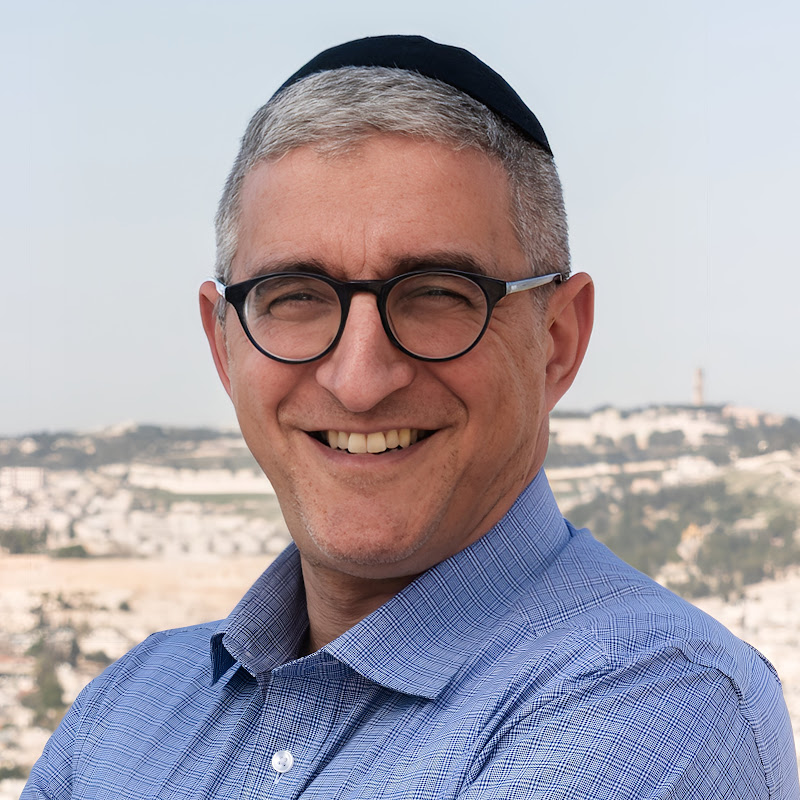
Transcript [00:00] A lot of people have reached out to me [00:02] asking me if I'm okay because of this [00:04] headline that you see on your screen. [00:06] There was a missile attack, a direct hit [00:09] in the town of Beth Shemesh about 30 [00:12] minutes outside Jerusalem. That is where [00:14] I live. I'm in Beamesh right now. And we [00:17] actually heard the impact. We heard the [00:20] sound. We heard the boom from sitting [00:21] inside our safe room, our bomb shelter [00:23] in our home. And it was a pretty [00:25] devastating attack. Let's get to it and [00:27] we'll start our our uh we'll start our [00:30] update right there. Number of wounded in [00:33] Bamesh strike being treated in hospitals [00:35] rises to 50. Um the there were nine [00:39] people killed as of now. That's the [00:41] number. Hadasa and Karum reports it's [00:43] treating 18 people who were who were [00:45] injured in the strike including three [00:46] children. Others went to other [00:48] hospitals. It's one of the major [00:49] hospitals in Jerusalem. Uh so a [00:52] different hospital had 17 people, 15 [00:54] people and then others went to to other [00:58] places. This was a mass casualty event, [01:00] the first one of the war in terms of [01:03] Israeli civilians. There were a few [01:04] other people who were killed. I think [01:06] there were two others who were killed in [01:07] Tel Aviv prior to [snorts] this, but [01:09] this was a major tragedy. Uh again, a [01:12] direct hit today. And I was asked about [01:13] it. I went on uh I frequently appear on [01:16] Steve Bannon's war room and he asked me [01:19] about this today about you know what [01:21] it's doing to the spirit of the Israeli [01:22] people and I just said look it's [01:24] terrible it's a terrible tragedy we [01:26] mourn the loss of every life but [01:28] Israelis have their eyes wide open we [01:30] have since October 7th we always have we [01:33] know that these situations are costly [01:35] and that there will be costs I I made [01:38] this point especially in light of the [01:40] fact of the uh that Americans [01:44] according to polling are in favor of [01:47] taking down the Iranian regime, but they [01:49] don't want to incur any casualties. And [01:51] I understand that it's not they don't [01:52] see it as an existential threat. But [01:54] here in Israel, we're very resilient. We [01:56] understand that there are costs. It is a [01:58] tragedy. But we also know that what we [02:01] are suffering from these missile attacks [02:02] is a drop in the bucket compared to [02:05] Iran's capabilities before this war and [02:09] certainly before the June war. We know [02:11] that u the Israelis have said today that [02:15] they have destroyed approximately half [02:18] of the missile capabilities of the [02:20] Iranians of the missile stores of the [02:22] Iranians. So this just gives you a a [02:24] small small taste of what we would have [02:26] been up against had we let this [02:27] ballistic missile threat get worse. And [02:30] therefore, my point being that even [02:32] though there are some deaths that come [02:34] with these strikes by the Iranians, it's [02:36] not like there's regrets on the Israeli [02:38] side for dealing with this existential [02:40] threat from Iran. Let's get to some [02:42] other political issues that are going on [02:45] here. So, there were also three US [02:48] soldiers who were killed and five [02:50] injured in an op in uh in this in this [02:53] war. This was announced earlier today by [02:55] Sentcom. Three US servicemen were killed [02:57] in action. Five others seriously wounded [03:00] and they didn't really give uh too many [03:02] details about it. They want to uh inform [03:05] the families first. But this is a big [03:07] development. I talked about this in the [03:09] leadup to the war that the American [03:11] people and I just mentioned it now. The [03:13] American people have have have basically [03:14] said that they don't want to that [03:16] they're not willing to stomach any [03:17] casualties. And Trump in his opening [03:20] remarks at the launch of the war [03:21] yesterday or Friday night in America [03:24] time said that there could be some [03:27] deaths and he was kind of preparing the [03:29] American people for the fact that there [03:30] could be loss of life involved here [03:33] because of how much opposition there is [03:35] to it. And I predicted before the war [03:38] that once there would be some American [03:40] American lives lost, the political [03:42] pressure would ramp up on Trump to end [03:45] this thing quickly because Americans [03:47] don't really have a stomach for people [03:48] coming home in body bags to fight this [03:50] war overseas against the Iranians, [03:53] especially when many Americans did not [03:55] see the Iranian threat as an imminent [03:58] threat that needed to be dealt with so [04:01] urgently. and therefore the appetite for [04:02] absorbing uh casualties is extremely low [04:07] and this could have political [04:08] implications again because of the [04:10] sentiment in the United States. Uh at [04:14] the same time we have the the IRGC the [04:16] Iranian revolutionary guard corps is [04:18] announcing that no ships will be allowed [04:20] through the straits of Hormuz. They [04:22] basically sent out messages and we see [04:25] here how it's reported. An official from [04:26] the European Union's naval mission, [04:28] SPDes, said on Saturday that vessels [04:31] operating in the Gulf have been [04:33] receiving VHF radio messages from the [04:36] the IRGC, stating that no ship is [04:39] allowed to pass the Strait of Hormuz. [04:41] The official who spoke to Reuters on [04:43] condition of anonymity said Iran has not [04:45] formally confirmed issuing this order, [04:48] but again, they are receiving these [04:51] orders. The Straits of Hormuz is [04:52] considered the world's most vital oil [04:54] export route, serving as a critical [04:56] choke point, connecting major Gulf oil [04:59] producers, including Saudi Arabia, Iran, [05:01] Iraq, and the UAE to the Gulf of Oman [05:04] and the Arabian Sea, and ultimately on [05:06] to India, China, etc. A fifth of the [05:09] world's oil consumption passes through [05:12] this narrow waterway. [05:15] Okay, so here the Iranians are saying [05:17] that they're that they're closing the [05:18] Straits of Hormuz. I will point out yet [05:21] again that they they tried to close the [05:23] Straits of Hormuz during the 12-day war [05:26] in June, but the Chinese forced them to [05:28] reopen it. We'll see how this situation [05:31] plays out. Now, I want to talk I want to [05:33] spend a few minutes talking about Saudi [05:35] Arabia because they've been behaving [05:36] very strangely. [05:38] [laughter] On the one hand, the Saudis [05:41] were, you know, seem to be really [05:43] pushing publicly against attacks on the [05:46] Iranian regime before this all happened. [05:49] And they also had made a sharp turn [05:51] against the Israelis diplomatically over [05:53] the last few months, hardening their [05:55] stance on uh you know on on the issue of [05:58] normalization with Israel. [06:01] And they seem to be playing their [06:02] constant game. Just to recap, the Saudis [06:05] for years have been playing this [06:07] cat-and- mouse game with the West where [06:09] sometimes they cozy up to the Chinese [06:11] and then sometimes they cozy up to the [06:13] Americans and then they go back to the [06:14] Chinese. and also in the Muslim world [06:16] where they'll be in the camp of the [06:18] Abraham Accords type moderate states [06:21] that want normalization with Israel and [06:23] want better relations with the West, but [06:24] then they'll shift back over to the more [06:26] radical side, more the more Islamist [06:28] side. Uh they talk about being [06:30] pro-western, but they're also one of the [06:32] worst countries when it comes to [06:33] persecuting Christians. They're [06:34] constantly playing both sides. This is [06:36] their game. And part of the reason that [06:38] they do this is that they see themselves [06:42] as extremely strategically important to [06:44] everyone because if you look at a map [06:46] and you see how Saudi Arabia is this [06:48] massive landmass that is so important [06:49] for trade routes and security and it [06:51] sits on import on vital waterways that [06:54] everyone wants them on their side. And I [06:57] was saying in my analysis before this [06:59] war that I believe that the the Saudis [07:02] were against war with Iran were against [07:05] the Iranian regime falling because if [07:07] the Iranian regime falls and it becomes [07:09] a pro-western state then the Saudis are [07:11] less strategically important and they [07:13] lose a lot of their leverage and [07:14] therefore they would be somewhat [07:16] rendered irrelevant geopolitically [07:19] in comparison to their current status [07:21] and that therefore they would be opposed [07:24] to bringing down the Iranian regime. And [07:25] that was interesting because reports [07:27] came out right after the attacks started [07:30] yesterday that it was actually the [07:32] Saudis behind the scenes along with the [07:34] Israelis who were pushing the United [07:36] States to attack. So I'm I'm trying to [07:38] sort this out and I noticed these two [07:40] headlines I want to share with you. One [07:41] of them is that Saudi Arabia issued a [07:43] public denouncement of the attacks on [07:46] the UAE, Bahrain, Qatar, Kuwait and [07:49] Jordan. [07:50] And uh the Kingdom of Saudi Arabia [07:52] condemns and denounces in the strongest [07:54] terms the treacherous Iranian aggression [07:56] and the blatant violation of the [07:58] sovereignty of each of the United [08:00] Emirates, the Kingdom of Bahrain, the [08:01] state of Qatar, the state of Kuwait, and [08:03] the Hasheite Kingdom of Jordan, [08:04] affirming its full solidarity and [08:07] standing by the side of the sister [08:09] states. The statement warned of the [08:12] grave consequences of the continued [08:14] violation of the sovereignty of states [08:15] and the principles of international law. [08:17] It didn't mention Israel or the US. And [08:20] another Wall Street Journal story saying [08:22] that Saudi Arabia had intercepted an [08:25] Iranian attack on Riyad on on Saudi [08:28] Arabia itself. Saudi Arabia said it [08:30] repelled cowardly attacks by Iran [08:33] against the region around its capital [08:35] Riyad and other locations in the eastern [08:37] part of the country, eastern part of [08:39] Saudi Arabia. It condemned Thran for [08:41] attacking even though Saudi Arabia said [08:43] it wasn't allowing its territory or [08:45] airspace to be used in US and Israeli [08:48] attacks on Iran. [08:50] Okay, so here we have the Saudis who are [08:54] coming out with these strong statements [08:56] against the Iranians and reportedly were [08:58] in favor of attacks. So what to make of [09:00] that? Uh are the Saudis again playing [09:02] every side, making it seem like they're [09:05] against the attacks, but really they're [09:06] in favor of the attacks? whose side are [09:08] the Saudis on? And it could be that the [09:11] Saudis are just front runners and [09:12] they're always looking to see who's [09:13] going to win. And that, you know, over [09:16] the last few months, they saw that the [09:17] Qataris and the Turks with their [09:19] hardline stance on Israel were very much [09:22] influencing American policy and that [09:23] maybe the Middle East was moving in that [09:25] direction. So they so they got into that [09:27] camp. But now that they see that Israel [09:30] and the US are really going for it when [09:33] it comes to the Iranian regime, that [09:34] they want to be on the winning side of [09:36] that. It's hard to read what the Saudis [09:38] are doing. I'll keep talking about this [09:39] in the days to come as we watch their [09:41] behavior, but I have a hunch. [09:44] I have a hunch that what they really [09:46] want is for this war to end with the [09:50] regime very weak but not totally fallen. [09:54] And I say that because of this story. [09:56] This was an Arab news. It was reported [09:58] in a lot of places, but Arab news is a [10:00] Saudi outlet. And I thought it was [10:01] interesting because they don't cover [10:03] everything. They choose which stories to [10:05] run. Again, this is a Saudi regime [10:07] outlet. This is an outlet Arab news [10:09] owned by a member of the Saudi royal [10:11] family and they report on this US [10:13] military operations ahead of schedule. [10:15] Iranian leaders want to talk Trump. [10:18] Okay. US President Donald Trump said on [10:21] Sunday that Iran's new leadership wants [10:23] to talk to him and that he has agreed, [10:25] according to an interview with the [10:26] Atlantic magazine, quote, "They want to [10:28] talk and I've agreed to talk, so I'll be [10:30] talking to them. They should have done [10:31] it sooner. They should have given what [10:33] was a very practical and easy what was [10:35] very practical. They should have given [10:37] what they should have given what was [10:39] very practical and easy to do sooner. [10:41] They waited too long. Trump said in the [10:43] interview from his Florida residence. He [10:46] did not specify who who he'd be talking [10:47] to and when it would be happening. [10:50] Iranian President Masud Peshan said a [10:52] leadership council composed of himself, [10:54] the head of the judiciary and a member [10:56] of the powerful guardians council had [10:58] temporarily assumed the duties of the [11:01] supreme leader following the death of [11:03] Kamay, [11:05] right? And Trump pointed out that some [11:07] of the people involved in the recent [11:08] talks are no longer alive. [11:11] Um, and you know, he says they could [11:13] have made a deal. They should have done [11:14] it sooner. They played too cute. Trump [11:17] also said Sunday that 48 Iranian leaders [11:19] have been killed in the USIsraeli [11:21] bombardments of the country and that the [11:23] offensive is very positive. Quote, [11:25] "Nobody can believe the success we're [11:27] having. 48 leaders gone in one shot and [11:30] it's moving along rapidly." [11:32] He said that to Fox. And [11:38] Trump claimed overall success in the [11:39] war, which was launched Saturday with [11:41] the goal of removing Iran's leadership [11:43] and destroying its military. Iran has [11:46] confirmed the death of its supreme [11:47] leader Ali Kamayi. We're doing our job [11:49] not just for us but for the world and [11:51] everything is ahead of schedule. [11:54] Okay, so here is kind of uncritically [11:57] the Saudi the Saudi outlet presenting [12:00] this news item about how how the Iranian [12:04] regime is is willing to talk and is is [12:10] putting together this council that's [12:12] going to run things. But at the same [12:13] time that the goal of the United States [12:15] is to is is regime change. Now, here's [12:19] what I am looking for. I'm not saying I [12:21] hope this happens. I'm not saying I [12:23] think it's going to, but I'm looking for [12:24] this to see if it signals where the [12:26] Saudis are going. [12:29] If it's true that they're suddenly going [12:31] to start talking and that this new group [12:34] leading Iran without the Ayatollah led [12:37] by Pzesh Shakyan who is known as more of [12:40] a moderate type, less of an Islam, less [12:43] of a hardcore [12:45] uh jihadist or a hardcore religious guy [12:49] in the way that that the supreme leader [12:52] is. He's more known as what's called the [12:55] reformers who aren't really reformers. [12:57] are still part of the regime. They're [12:58] still part of the regime, but they're [13:00] less they're less hardcore on the Islam [13:03] stuff. If Peshakyan gets a little group [13:06] together and they start negotiating with [13:08] Trump and they give him a ladder to [13:10] climb down off of and the regime kind of [13:13] stays in power but it's not as [13:15] aggressive and it's not as you know it [13:19] and and it's really the same criminals [13:21] running the show and they kind of keep [13:23] their heads down till the end of the of [13:25] the Trump administration and they ease [13:27] up on some of the heavy persecution of [13:29] their own people. We could see [13:32] something. This is what I've been [13:33] warning about. That looks like a regime [13:35] change and that might be something that [13:37] the Saudis want. The Saudis would be [13:39] perfectly happy if there is a more [13:41] moderate Islamic regime in Iran, but [13:44] they don't want it to be a democracy. [13:46] The last thing the Saudis want is a [13:48] fullon westernstyle free democracy where [13:51] Christianity is free and flourishing [13:54] because there is a growing underground [13:55] church and a lot of Iranians are [13:57] rejecting Islam because of their hatred [14:00] of the regime that the Saudis don't [14:02] want. So I suspect that the Saudis are [14:05] going to be pushing this angle of [14:07] looking for a ceasefire, looking for [14:09] talks with a very weakened Iranian [14:11] regime. That's what I'm keeping my eye [14:13] out for. Maybe I'll be wrong, but [14:16] something to watch. Now, on the Iran [14:18] side, I was looking at WANA, which is [14:19] the Iranian regime media. We're going to [14:21] look at a number of headlines that [14:22] they've posted today because again, [14:25] Iranian regime media tells us what [14:28] they're signaling and where they want [14:30] this to go. So, first of all, there was [14:32] this interesting headline, a warning to [14:33] Iran's northern neighbors. Check this [14:36] one out. And and the article is [14:38] accompanied by a picture of Iran's [14:40] northern neighbors. You see it [14:42] Usbekiststan, Turkmanistan, [14:45] uh, Kazakhstan, right? You got Russia up [14:47] there. Sources indicate that if any of [14:49] Iran's northern neighbors who have so [14:50] far not been targets of Iranian missile [14:52] strikes become involved in the military [14:54] aggression by the US and Israel, these [14:56] countries will be added to Iran's target [14:58] list. Sources indicate, look, sources [15:00] indicate this is Iran regime media. [15:02] They're saying it. This is like it's [15:03] basically a press release warning them. [15:05] Okay. The sources further warned that [15:08] Iran's northern neighbors, [15:10] if they support the US and Israeli [15:12] attacks, will face missile strikes [15:14] similar to those directed at the Persian [15:16] Gulf States. In the past few hours, [15:18] several foreign media outlets have [15:20] reported the deployment of US and [15:22] Israeli fighter jets in two of Iran's [15:25] northern neighboring countries. Aha. So, [15:27] the Iranians are saying, [15:30] "We know that the US and Israel are are [15:33] are setting up shop in two of our [15:36] northern neighbors. We're not going to [15:37] name them, but we're warning all of the [15:40] northern neighbors that if you [15:41] participate in this, we're going to [15:43] attack you with our missiles." [15:45] Okay? [15:47] Based on information released by Iranian [15:49] official sources, the following [15:51] locations were listed among the targets. [15:53] And then it gives us all the different [15:54] countries and where they were attacking. [15:56] Israel military sites, Bahrain, uh [15:59] headquarters of the US fifth fleet and [16:01] another base, [16:03] Qatar, Kuwait, Emirates, Saudi Arabia, [16:08] Jordan, Iraq. All the US bases and [16:10] assets are listed in this article. It [16:13] doesn't list any specific countries in [16:15] the north, but you see this is an [16:17] interesting uh press release, as it [16:19] were, warning Iran's northern neighbors. [16:24] Also of note in in Wana is they ran a [16:27] number of stories of people mourning the [16:29] death of the supreme leader because [16:31] we've seen all over the place [16:33] celebrations. I made a video earlier [16:35] today about some of the positive [16:37] reactions the celebrations in the [16:38] streets and in the west uh uh [16:42] celebrating the death of Kamaya. But [16:44] it's of course in in Iran's interest to [16:46] say no no no no there are people all [16:48] over the world who are mourning it. So [16:49] they here's a story about Shiites in in [16:53] India [16:55] who are mourning the death of Ali Kamay [16:58] and they show a big demonstration [17:01] uh of of all these people in the mosques [17:04] in the Shiite mosques in in Kashmir and [17:08] Jamu in areas that have a lot of Shiite [17:11] Muslims in India. Okay. And then look at [17:15] this one. Putin offers condolences over [17:18] the assassination of Iran's supreme [17:19] leader, Vladimir Putin. Now, Vladimir [17:22] Putin, I find this laughable. Why? [17:25] Because in January of 2025, about a year [17:28] ago, the Russians signed a strategic [17:31] partnership with Iran. It was a defense [17:34] and security partnership. It it [17:37] according to that agreement, the [17:38] Russians are supposed to help the [17:40] Iranians [17:42] in a defense and security situation. [17:44] They're not lifting a finger. But [17:47] Vladimir Putin expressed his condolences [17:50] to the people of Iran. He called Ayatah [17:52] Kamay an outstanding statesman who [17:55] played a major role in developing [17:56] friendly relations between Russia and [17:59] Iran. He he concluded by expressing [18:02] sympathy with the Iranian nation and [18:04] government, reaffirming Moscow's [18:06] commitment to the continuation of [18:07] strategic cooperation between the two [18:09] countries. But he's not lifting a finger [18:11] to help them in this war. I love Putin. [18:13] I don't love Putin. I'm kidding. I'm [18:15] saying that cynically. He's just he's [18:17] such a character. He signs a strategic [18:19] cooperation agreement with them. It says [18:21] that it includes defense and security. [18:23] Iran gets attacked. He doesn't lift a [18:26] finger. He offers condolences and says [18:28] that we're still committed to strategic [18:30] cooperation. All right, there's Putin [18:32] for you. Um, and then it also, this is [18:36] very important, Turkey and Azarbaian [18:39] extend condolences to Iran. Look at [18:41] that. No condolences from Saudi Arabia. [18:44] No condolences from Jordan. No [18:46] condolences from I don't know Ashara in [18:49] Syria. No condolences from Egypt. Who's [18:52] expressing condolences? Turkey and [18:54] Azarbaian. Look at that. The Turkish [18:57] foreign minister Hakan Fidan. [19:00] Right. During separate calls, Turkish [19:02] Foreign Minister Haken Fidan and [19:04] Azarbaijani foreign minister Jahun [19:06] Bramav expressed their official [19:08] condolences regarding the assassination [19:10] of the Supreme Leader. [19:13] Okay, so this is significant because [19:16] Turkey is supposed to be an ally of the [19:19] United States. [19:21] Qatar and Turkey have been like blood [19:23] brothers for the last couple years [19:25] working together. Qatar is being [19:27] attacked by Iran and is certainly not [19:30] offering any condolences. None of the [19:32] other Arab states are offering [19:33] condolences. The other Muslim states, [19:35] but Turkey stepped up to offer [19:37] condolences, and we might see them [19:40] playing a diplomatic role trying to [19:42] bring a premature ceasefire and save the [19:45] regime from total collapse. So, let's [19:46] keep an eye on Turkey. Let's keep an eye [19:49] on Saudi Arabia. And now, let's check in [19:52] on on what to what else to look for in [19:54] the coming days. Okay. So, first of all, [19:55] we have Prime Minister Netanyahu [19:57] stood on top of the Kira. That's the [20:00] military head headquarters in Tel Aviv. [20:02] The military and intelligence [20:03] headquarters in Tel Aviv. He stood on [20:04] the top of the Kira on the roof [20:07] and he recorded a video where he said [20:09] that we will intensify Iran attacks in [20:12] the coming days. [20:14] Yesterday, we eliminated the dictator [20:16] Kamay. Together with him, we eliminated [20:19] dozens of senior officials of the [20:21] oppressive regime. Our forces are now in [20:23] the heart of Tehran with increasing [20:24] strength and this will only increase [20:26] even more in the coming days. We are in [20:29] a campaign in which we are bringing the [20:30] entire strength of the IDF as never [20:33] before [20:34] to this campaign to ensure our existence [20:37] and our future. The combination of this [20:40] combination of forces allows us to do [20:43] what I have been hoping to do for 40 [20:44] years to strike the terrorist regime [20:46] squarely in the hip. That's what I [20:48] promised and that is what we will do. [20:51] Okay. And uh he also expressed [20:55] um he expressed uh his condolences for [20:58] for the deaths of those his mourning for [21:01] those who were killed in the attack in [21:03] Beamesh that I started this video with. [21:05] So you see here that Prime Minister [21:06] Netanyao is talking about escalation [21:09] intensifying the attacks in the coming [21:11] days that there's it's going to get even [21:12] heavier and the Israelis are now [21:15] attacking regime targets in Thran. [21:18] They've opened up they've opened up air [21:20] superiority, air dominance pretty much [21:22] all across Iran and they're saying that [21:25] it's going to intensify. [21:28] Meanwhile, we have we have Trump talking [21:30] about talks, right? US military [21:33] operations ahead of schedule, right? [21:36] Ahead of schedule. We looked at this [21:37] already, but Iranian leaders want to [21:40] talk, says Trump. So Trump might be [21:42] interested in talks and coming and [21:45] bringing this to a swift conclusion [21:47] especially we have US casualties which [21:51] you know which just happened today and [21:53] therefore we haven't even seen what the [21:56] political pressure on Trump looks like [21:58] with American servicemen coming home in [22:00] body bags. So we could be looking at a [22:03] situation where Trump wants an offramp. [22:06] Turkey, [22:08] maybe the Saudis, maybe the Qataris, [22:10] maybe some some of the other actors are [22:12] like, "Hey, look, we're we're thrilled [22:14] to see the Iranian regime get slapped [22:16] around, but we don't want it to fall." [22:18] Okay? Because I don't believe that they [22:19] want the regime to fall. I believe that [22:21] they want it to be weak, but not fall. I [22:24] think we might see a an interesting [22:26] situation where Trump is stopping short [22:29] of bringing down the regime or doesn't [22:32] feel that it's his that it's his job to [22:34] bring down the regime, which again [22:36] really it isn't. It is the job of the [22:37] Iranian people, but that Trump is going [22:39] to look for a quick offramp and to end [22:41] this rather soon. And meanwhile, the [22:43] Israelis are saying, "No, no, no. We're [22:45] just getting started." So, it could be [22:47] an interesting collision course there. [22:50] And it'll be interesting to see how the [22:52] Israelis react if the Americans want to [22:54] end the war but the Israelis want to [22:56] continue because the interests of Israel [22:58] and of the United States are not [23:00] identical and we have to remember that [23:03] at all times they are not the same. Uh [23:05] they there's a lot of lot of overlap and [23:07] certainly a lot of cooperation but they [23:08] don't necessarily have the exact same [23:10] interests here. So this is where things [23:12] stand and we'll be watching these [23:14] various plot lines as things progress. [23:19] All right. Uh, so thank you everyone for [23:21] your prayers and uh, and let's keep uh, [23:23] you know, let's keep our eye on the [23:24] ball. Keep watching what we're putting [23:26] up on this channel and make sure to [23:28] check out everything that we're doing at [23:29] Israel 365 News YouTube channel as well. [23:32] God bless you.