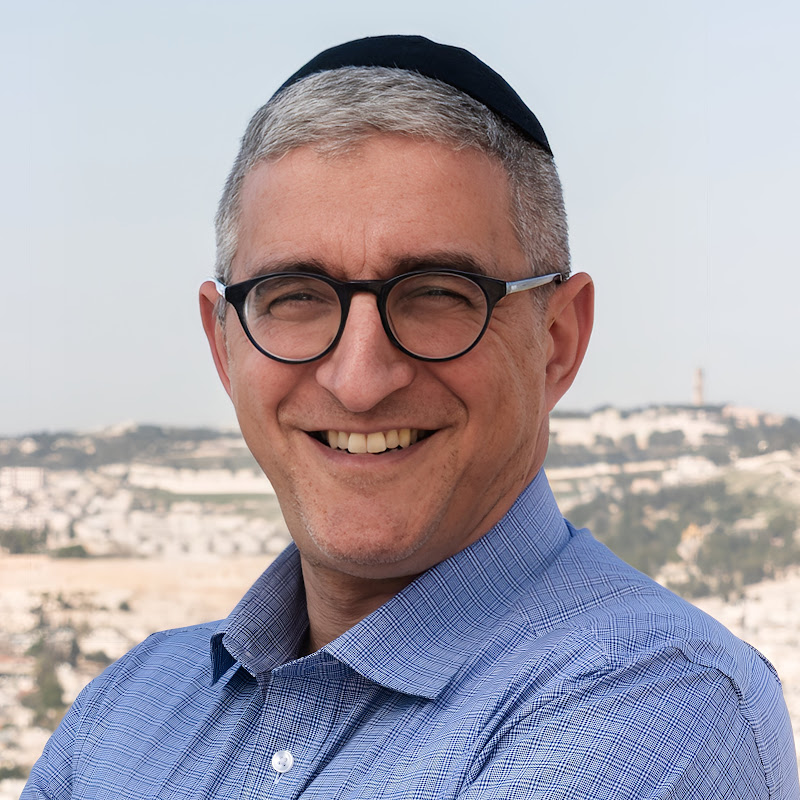
Transcript [00:00] recording hey everyone welcome back to [00:04] Israel matters where we discuss the [00:06] matters that matter to Israel at this [00:09] complicated time in the world how you [00:11] doing Elliot I'm doing well thanks how [00:14] are you this is of course Elliot I'm [00:16] sorry this is rabbi Willie kee I don't [00:17] have a Pesach well lookey and of course [00:19] as always my partner Elliot showed off [00:22] is here with me before we get back to [00:25] what's going on in Israel's borders and [00:27] what's going on with Israel's enemies in [00:29] the region I just wanted to share a [00:31] thought from the weekly Torah portion [00:33] that it occurred to me and it's not [00:35] really about anything anything specific [00:37] that said in the weekly Torah portion [00:39] but a theme that comes up our weekly [00:43] Torah portion deals with the the wicked [00:46] sorcerer or prophet whatever you want to [00:49] call him bill um sometimes pronounced [00:51] Balaam and some of the translations in [00:54] the Book of Numbers who is hired by [00:57] Bible och who is who is is the king of [01:04] Moab and he hires him in order to curse [01:06] the people of Israel he's afraid of the [01:10] people of Israel and he wants them [01:11] cursed and of course bill um has this [01:13] experience where where God takes over [01:16] his mouth so to speak or or essentially [01:20] uses him as a tool and instead of [01:22] cursing Israel he blesses Israel and he [01:25] blesses them multiple times and it [01:26] appears that the last blessing was not [01:28] forced by God but he finally blessed [01:30] them willingly but what I wanted to what [01:33] I noticed as I was reading through it is [01:34] that almost every time that that that [01:38] bill um mentions the people of Israel he [01:41] mentions in his blessings of them he [01:44] uses he calls the people of Israel Jacob [01:48] and he calls them Israel so the most [01:51] famous verse of that is where he says [01:53] how goodly are your tents o Jacob your [01:57] Tabernacles or your dwellings Israel and [01:59] he he but he actually does this right [02:03] from the very beginning of his blessings [02:04] and he does it over and over again so [02:05] for example you have bow lock leads me [02:09] the king of Moab [02:13] and he says go cursed Jacob for me go [02:17] censure Israel that's in verse seven and [02:19] then he does it again where he says in [02:23] verse ten who has counted the dust of [02:25] Jacob or has tallied one quarter of [02:27] Israel he keeps referring to Jacob in [02:29] Israel Jacob in Israel and the people of [02:32] Israel we don't think of them as being [02:34] called Jacob but the truth is that the [02:37] people of Israel collectively are called [02:39] Jacob sometimes in the Bible and [02:40] sometimes they're called Israel and I [02:42] just wanted to share one very very short [02:44] idea about that because I've probably [02:46] already gone on too long which is that [02:49] Jacob is the name that Jacob gets [02:52] because he's following Esau he's the [02:54] second one out he's following him on his [02:57] heels Esau also refers to Jacob's name [03:00] as meaning kind of deception or kind of [03:03] you know being conniving but that's what [03:08] the name in Genesis first implies so [03:11] it's a name that implies some sort of [03:12] secondary status but the name Israel [03:16] really implies sort of priesthood or [03:19] ministry or or or princely nobility [03:22] that's what that name implies and I [03:24] think that what what's going on here is [03:27] that bill saw the full scope of the of [03:31] the impact of the people of Israel of [03:33] the Jewish people on the world and and [03:37] he's the first person to ever mention [03:38] the end times he's talking about like [03:40] what the long-term impact of Israel is [03:43] and that that long-term impact really [03:46] comes in two ways it comes in the form [03:47] of Jacob that when the people of Israel [03:49] are in exile scattered and even during [03:52] all those centuries of our persecution [03:54] that's when we're Jacob when we had a [03:56] second place status we were still having [03:59] an impact on the world but then there's [04:01] the impact we have when we are Israel [04:03] when we are powerful and when we are [04:05] noble and when we are in a position to [04:08] wrestle you know with the angel of ISA [04:11] you know and and and win so I think [04:15] that's still true today that the people [04:16] of Israel our story throughout history [04:19] the story of Jacob as it were is it has [04:23] impact on the world and we also have [04:24] impact on the world when we're when [04:26] we're in a position of [04:27] power and and that's a socially [04:29] interesting thing to watch as you know [04:30] everyone who's who's listening to this [04:32] or watching this when you read your [04:34] Bible and you see the people of Israel [04:36] being referred to as Jacob like in [04:38] Jeremiah chapter 17 where it refers to [04:40] God redeeming Jacob from one mightier [04:43] than he that this is really talking [04:46] about the people of Israel as we had [04:48] survived throughout the centuries of [04:50] Exile and you know but thank God today [04:53] we have returned to being Israel to [04:55] being a powerful nation that has impact [04:57] on the world in and can triumph so yeah [05:01] that's my biblical thought for the we [05:03] thank you good thank you thank you very [05:07] much so so last week we were talking [05:08] about Iran's you know recent recent [05:14] behavior specifically we were talking [05:15] about an explosion that happened in Iran [05:17] and how Iran was posturing and making [05:20] statements about it and because that was [05:23] such a hot current of current events [05:24] issue last week we were talking about it [05:26] but let's bring this you know if you [05:29] could take us back to the to where we [05:31] were last time and then and then maybe [05:33] let's move into what exactly is Iran [05:36] doing in Syria what's their goal you [05:39] know what are their goals they're they [05:40] don't want to topple the Syrian [05:42] government but they do want to operate [05:44] there and so what exactly is their game [05:46] and and and of course bringing it all [05:48] back to what impact does this have on [05:50] Israel okay well first of all there have [05:53] been a number of explosions this week in [05:56] other places in Iran oh yeah Iran has [06:00] been blowing up all over the place not [06:04] have they been making a statements have [06:07] they been no they're no accidents here [06:10] in accidents there and they may be some [06:14] of them might very well be I should [06:18] before we get into what's happening here [06:21] in the region we should also mention [06:23] that one of the iranian leaders this [06:26] week said that many Americans is an [06:31] Iranian leader said this many Americans [06:33] today have finally adopted our slogan [06:36] death to America [06:38] Wow it's an interesting observation [06:43] comment you know lines are being drawn [06:46] in the world and they're being drawn in [06:49] such interesting ways this you know on [06:51] the other hand we also see that that [06:54] there was for the very publicly [06:56] announced that the United Arab Emirates [06:58] and Israel medical researchers in those [07:01] two countries are now openly cooperating [07:04] a coronavirus research you see like you [07:06] know where you know who's who's an enemy [07:10] and who's an ally is constantly shifting [07:12] and you see that in the streets of [07:13] America yes [07:15] Qatar is going in with Turkey now you [07:19] know before we before we go into the [07:23] Syrian story from the Iranian move I [07:29] think it pays to relate it to something [07:32] you just said in a more theoretical [07:34] sense we look upon these shifts [07:38] yesterday's friends today's enemies [07:40] tomorrow perhaps friends again we look [07:45] at it in the context of the world that [07:48] most of us grow up in which was the Cold [07:50] War and even those who are younger we [07:54] were post Cold War but the cold war has [07:57] an impact the whole field of [08:01] international relations developed during [08:03] the Cold War in other words that there's [08:04] there's a model context and the fact is [08:08] the 50 years of the Cold War were very [08:12] unusual in terms of international [08:15] relations in human history camps well it [08:21] was not just two camps I mean that's [08:24] part of it was a bipolar world but it [08:28] was also a very stable world you know [08:30] when I say stable I mean politically [08:32] stable not that it had it certainly had [08:35] its moments there was that Cuba thing [08:37] back in 62 and there were conflicts in [08:41] many conflicts but there was a political [08:43] stability in the sense that you woke up [08:45] in the morning and you pretty much knew [08:47] who your team was and who their team was [08:49] because was the exact same team that [08:50] it's been three [08:51] years and it's not going to change very [08:53] much in the entire period there's only [08:57] one major country that voluntarily [08:59] changed sides Egypt in the 1970s went [09:05] from the Soviet to the American orbit [09:08] but other than conquests no major [09:12] country woke up one morning and said ok [09:16] yesterday I was there today I'm going [09:18] somewhere else and that's that's [09:20] stability though the lines were drawn [09:22] and they stayed that way that's not [09:24] typical what we're seeing today is much [09:28] more typical diplomacy international [09:32] relations that's gone on through history [09:34] let's not forget the Germans and the [09:37] Russians signed a non-aggression pact in [09:39] 1939 when the Kaiser declared war in [09:43] 1914 he was convinced that Britain would [09:46] remain neutral because Britain doesn't [09:51] fight alongside France Germany and [09:53] Britain defeated friends 100 years [09:55] earlier under Napoleon and the US and [09:58] that conflict did remain neutral until [10:00] pretty late right right very late all [10:04] I'm saying is that this idea of a stable [10:10] diplomatic world with no shifts and no [10:14] behind the stains and no short-term [10:19] dealings because it works for me today [10:22] and it may not work for me tomorrow [10:24] that standard there's a great story may [10:28] be apocryphal but it's a great story [10:29] anyway [10:30] that they woke up the the Austrian great [10:33] Austrian statesman but met her neck in [10:36] the middle of the night and told him of [10:38] the rest the Russian ambassador is [10:39] dropped dead and he said I wonder what [10:42] his motive could have been that's the [10:49] way the world really works and that that [10:51] 50 years of the Cold War was actually an [10:53] anomaly so on the one hand which is why [10:57] by the way and I've discussed this in [10:59] lectures when the Russians and the Turks [11:02] were working together and we said [11:04] everyone [11:05] look the Turks and the Russians are [11:06] developing this long-term relationship [11:08] it's like no Turkey and Russia have been [11:10] adversaries for centuries this is a [11:12] short-term agreement of convenience and [11:15] it'll fall apart in its own right and [11:19] the Turks are using it for their benefit [11:21] the Russians for their benefit and so on [11:22] and so forth [11:23] you know what you're saying also helps [11:26] frame something you talked about in two [11:30] episodes ago for those of you who who [11:32] haven't seen it go back in and watch [11:34] that one our discussion of Russia that [11:37] liked the idea you know the relationship [11:40] that let's say Israel has to Russia like [11:42] so Russia is an ally of Assad but [11:45] they're also kind of an ally of Israel [11:47] and they're kind of not meaning the gray [11:50] areas in these relationships are things [11:52] that were inconceivable in a cold war [11:55] configuration right and I wouldn't even [11:58] use the word ally in either [12:00] it doesn't mean allies to too high [12:03] status it's almost a Cold War concept [12:07] like oh my exactly this camper in that [12:09] camp precisely precisely this itself [12:13] even if it's a tangent this is a very [12:16] interesting you know conversation and [12:18] it's not the kind of thing people get on [12:19] the news like this is no this is in [12:21] terms of framing what were what we're [12:23] seeing when we see the news right and [12:25] that leads us to the the Iran and Syria [12:28] point because we have to realize that [12:32] Iran is not a natural ally of Syria for [12:38] a number of reasons first of all and [12:41] this is also something that's largely [12:44] missed in analysis the Iranians are not [12:48] Arabs that are Persians just like the [12:51] Turks are not Arabs they're Turks Arab [12:54] is an ethnic definition based on [12:56] language an Arab is a native speaker of [12:58] Arabic the Arab world is the world of [13:00] native Arabic speakers that goes from [13:03] Iraq to Morocco and without breaking you [13:05] down just that belt and the Persians are [13:09] Outsiders the Persians and the Arabs [13:11] have been in conflict from it for [13:12] forever basic [13:15] so it's not a natural alliance in the [13:18] sense of let's say the the [13:23] english-speaking world has a sort of [13:25] natural affinity Canada England us [13:30] Australia right [13:32] [Music] [13:33] it's an affinity it doesn't guarantee [13:35] but there's an affinity here we're [13:37] talking about two different peoples [13:39] arabs and persians who have a natural [13:42] conflict that's gone on for a very long [13:44] time the second part of it and also one [13:48] that that's largely missed missed in and [13:52] lost is the idea that the iranians are [13:55] supporting the Assad regime because the [13:59] Assad's are alle whites the a lights [14:03] broke away from the Shiites and again we [14:08] have to go into the history of the [14:09] religious split and since they're so [14:12] near to each other religiously it's a [14:14] natural alliance between the Shiites and [14:17] the Alouettes now if you say that really [14:20] facts don't think about it it seems to [14:21] make sense the only problem with it is [14:23] that it flies in the face of all [14:26] understanding of conflict that's ever [14:28] been written you don't need to be a [14:31] great knowledgeable historian to know [14:34] that when one sect breaks away from [14:37] another the relationship between them is [14:40] not friendship [14:43] c-note Reformation in Europe but but [14:48] even if it's not on a national conflict [14:50] level even within denominations and here [14:54] we can go Jewish Christian it doesn't [14:55] really matter when a group splinters off [14:58] a denomination usually the the [15:00] relationship the reason for the split is [15:03] a conflict [15:04] it could be theological it could be [15:06] political it could be personal but it [15:08] doesn't really matter but the reason for [15:10] the split is a conflict and that [15:11] conflict intensifies as a result of the [15:14] split so in fact all understanding of [15:18] how religion religious division works [15:21] means that the Shiites and the alloys [15:23] are natural enemies despite all of the [15:27] above Iran is helping the Assad regime [15:30] and there are a number of reasons for [15:33] that it allows the the primary one is [15:37] that it permits the Iranians to operate [15:42] relatively freely in Syria now Syria is [15:46] critically important and here here again [15:50] I'm gonna degress into background and [15:52] this may may take the rest of the talk [15:54] but it's worth it because it's important [15:55] to understand sure and then we'll just [15:59] pick it up next week nicely you know we [16:01] want to go in-depth here you know that [16:03] right it's what we want okay so the [16:05] region that we're in the Middle East is [16:09] arguably the most important strategic [16:12] region in the world from global imperial [16:14] power perspectives and I won't get into [16:18] the debate why whether others this is a [16:21] very important read and it's important [16:24] geographically for two reasons there's [16:27] the obvious and the less obvious the [16:28] obvious one is for anybody who played [16:30] risk you know that the Middle East or [16:34] just look at a map is the crossroads of [16:37] three continents Africa Asia and Europe [16:40] this is this is the hub more importantly [16:44] from a global power perspective this is [16:47] also a bridge between notions [16:51] and I say that and it pains me to say it [16:54] as a because a ground forces officer [16:57] global power is projected by C not by [16:59] land [17:01] and in other navies and this is a region [17:08] and we can use Israel as a very good [17:12] example this tiny little country has [17:15] ports on the Mediterranean they go out [17:16] to the Atlantic and a port in a lot that [17:18] goes out to the Indian Ocean to the [17:19] Pacific and they're driving time two [17:25] hours away from each other and America [17:29] has ports on the Atlantic and Pacific by [17:30] the 3,000 miles away from each other [17:32] so now the Suez Canal makes it really [17:35] obvious by the way I don't know if you [17:37] know this but in ancient times there was [17:39] a Suez Canal [17:40] really yes it wasn't the Suez Canal as [17:43] we know it today but a canal was cut [17:45] from the Nile to the Gulf of Suez so [17:49] ships could actually go from the [17:51] Mediterranean via the Nile remember [17:53] we're talking about much smaller ships [17:55] in those days and through the canal and [17:57] I'll cut through the Red Sea other words [18:00] even back then before satellites and GPS [18:02] and all of that people and just people [18:05] who had a travel and [18:07] [Music] [18:10] this zone the Middle East has been a [18:14] central Imperial zone for about what [18:17] four thousand years [18:20] Wow [18:22] if you think about it now by saying [18:25] 4,000 years [18:28] I've I've essentially transcended two [18:30] very important categories of discussion [18:34] the first is technology other words [18:38] anything that's been a constant or [18:40] relative constant for 4,000 years is not [18:43] technology-based [18:45] all right the technology right okay well [18:49] we say technology we don't mean [18:50] something that's been around for 4,000 [18:52] years right right I mean but anyway [18:54] let's this keep in mind we you know we [18:57] said today and say what our we're in a [18:59] whole new era of technology every [19:02] generation since Adam has said that [19:07] [Laughter] [19:09] right we've got a wheel now nobody can [19:12] stop us every every generation comes up [19:16] with something new and there's change [19:18] and every generation says wow now you [19:20] know we've got new if we've hit the we [19:22] we've hit the peak but again if you go [19:26] back the Assyrians the Babylonians the [19:28] Persians the Romans are just throwing a [19:30] number of them out we're all different [19:32] different technological periods as where [19:35] the Turks as with the Brits as is the [19:38] world today and each one finds its way [19:41] back into the Middle East because of [19:43] this ocean bridge [19:46] now virtually every Empire that was [19:49] either homegrown or came from the [19:52] outside tried to get a foothold on those [19:55] two bodies of water [19:58] okay so just here's and here's the sort [20:03] of the kicker Turkey wants to get to the [20:06] Persian Gulf Iran wants to get to the [20:09] Mediterranean [20:12] and iran's iran's operations in syria in [20:18] large part not exclusively because some [20:20] of it has to do with us but in large [20:22] part has to do with maintaining a land [20:26] bridge between Iran and their naval [20:29] bases in Syria that were set up with the [20:32] permission of the Syrian government that [20:34] are on the Mediterranean coast why the [20:37] Mediterranean because from there out to [20:40] the Atlantic they said they want to be [20:42] in the Caribbean they have an ally in [20:44] Venezuela this because of military [20:47] aspirations or because of economic the [20:52] two are the two are intertwined if if [20:55] they're going to have relations with [20:56] Venezuela they need to be able to ensure [21:00] them with power if they want to if they [21:03] want to engage the United States they [21:06] want to be able to engage the United [21:07] States and the Atlantic not just in the [21:09] Persian Gulf [21:11] okay so so to sum up what we it so just [21:15] just kind of it seems like we're setting [21:16] the table for a much deeper [21:18] understanding of Iran's activity but the [21:21] most basic the most basic I guess fact [21:26] or rule that we should remember when [21:29] we're understanding the dynamics of [21:31] what's going on in Syria with all these [21:32] different actors is what everybody's [21:34] motivation is to be there and you're [21:36] saying that array that Iran's primary [21:39] motivation for its operations in in [21:42] Syria and it's and it's and it's [21:45] leveraging of its power there with the [21:47] Syrian regime is it has directly to do [21:50] with with being all with with getting [21:53] all the way across to the Mediterranean [21:54] yes so are they operating ports that [21:58] come out on the Mediterranean from [21:59] Syrian territory or yes no Syrian Syrian [22:04] territory as all the Russians by the way [22:08] for the same reason so there's a pure [22:15] strategic reason for their operating [22:18] there now we can add others we can add [22:21] to the fact to that the fact that it [22:23] serves Iran's defense purposes to have [22:29] very weak regimes in Iraq and Syria okay [22:33] you you don't want strong neighbors who [22:35] can wake up one morning like Saddam [22:37] Hussein did and decide to invade you [22:41] people forget you want yeah you want [22:44] vassals you want you know the [22:46] relationship that they have with Lebanon [22:48] through through their you know through [22:52] essentially the Iranian party in in [22:55] Lebanon that that has such a strong such [22:59] a great percentage of the power in that [23:00] country that's the ideal situation for [23:03] them and and even though they're not [23:05] going to achieve that level of of [23:07] control in Syria if they can have some [23:10] leverage and that they're holding over [23:11] the Syrians so I you know maybe if this [23:17] this is you know we can't go much [23:19] further than this today but I think [23:21] maybe next week we should you should [23:22] pick up at some when we as we understand [23:25] what Iran is doing in Syria and what [23:27] their motives are we have to understand [23:29] what the relationship between them and [23:31] the Russians is in terms of you know to [23:34] what extent it's love and to what extent [23:36] it's hate and to what and and and you [23:38] know are they at odds with each other or [23:40] are they or are they working together or [23:43] is it a little bit of both you know [23:44] these are the kinds of things we'd like [23:46] to understand as we as we take further [23:49] look at these dynamics again Elliott I [23:51] think that's all we have time for today [23:55] if you could just wrap us up yeah okay [23:58] first of all to relate to what to what [24:01] you just said I think that the relation [24:05] of the Iran Russian relationship is [24:06] classic mutual use abuse and what I [24:11] would rather do next time is to cycle [24:14] back into Iran versus Israel because [24:17] what Iran wants to do in Syria includes [24:22] as an Israel component that's partly [24:25] strategic but it's much deeper than that [24:28] and the much deeper part I think is [24:31] where we need to start next time because [24:34] the Iranian in contrast to everything I [24:37] said earlier the Iranian relationship to [24:39] Israel the the enmity that the hatred is [24:42] a constant and it's not based on [24:44] politics and it's not a cover for [24:48] something else it's not yeah you know [24:51] that's interesting because sometimes [24:52] ideology as as shrewd as these chess [24:55] players are if you know sometimes their [24:57] ideology can get away you know can get [24:59] in the way of of them making it [25:02] establishes it establishes their [25:04] objectives and they can still play [25:05] strategically you know let's leave that [25:09] for next leave that for next time that's [25:11] awesome [25:11] all right thanks a lot Eliot and [25:13] everyone you know have a wonderful [25:15] Shabbat have a wonderful week and and [25:18] let's remember to keep praying for for [25:20] you know for what matters to Israel most [25:24] god bless
Rabbi Pesach Wolicki and Security and Defense Analyst Elliot Chodoff continue their in-depth look at Iran's activities and motives in Syria. In this installment, Elliot gives us a brief outline of the historical trends that we need to understand in order to interpret current events accurately. And Pesach shares an insight about the name Jacob as nickname in Scripture for the Jewish people.