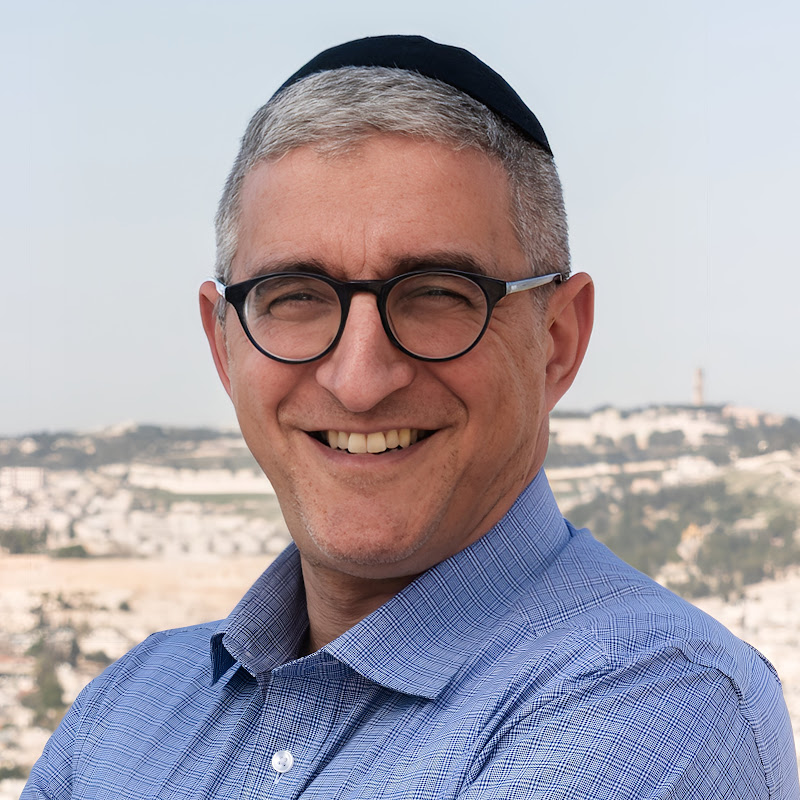
Transcript [00:00] Everyone, I had a really cool [00:01] opportunity uh just last night. I [00:03] appeared on the Big Weekend Show, which [00:06] is one of the most popular shows on Fox [00:08] News. The reason they had me on, they [00:10] say it at the beginning, but a lot of [00:11] people have been reaching out and asking [00:13] what it's all about. A few years ago, I [00:16] was a consultant for a project that Fox [00:19] Nation was doing, putting together a [00:21] four-part documentary series, of course, [00:23] with mostly reenactments, like a [00:25] dramatized documentary series about the [00:27] life of King David. And I was a [00:30] consultant on the script and then also [00:32] was one of the talking heads that [00:34] appears throughout the docue series. And [00:37] to be perfectly honest, I kind of forgot [00:39] about the project. It was years ago and [00:40] the wars happened in between. And then [00:42] about a month ago, the producers at Fox [00:44] reached out to me and asked me if I [00:46] would appear on some shows on Fox to [00:49] talk, you know, to promote the docu [00:51] series. But because I also do a lot of, [00:53] you know, commentary on current events [00:55] and and news, they wanted to put me on [00:57] some news shows to connect the David [01:00] series to current events. So, that's how [01:03] this this uh media appearance came [01:06] about. [01:08] But it's a short clip. It's only a few [01:11] minutes long, but I say something in [01:12] there that I want to I want to drill [01:14] down on because I think it's a very [01:16] important big picture idea about the war [01:19] that we're fighting, about the war that [01:20] we've been fighting since October 7th, [01:22] and I want to drill down on it further [01:24] here on this channel. All right, so [01:26] let's get to the clip. Here it is. This [01:28] is me last night on Fox. [01:32] As Operation Epic Fury enters its second [01:35] week, Israel has been a crucial ally in [01:38] ending the tyrannical regime in Iran. [01:41] Our next guest is a Jewish scholar [01:43] featured in Fox Nation's new series [01:45] David, King of Israel. Rabbi Pesai Wuiki [01:49] is the executive director of Israel 365 [01:52] Action and he joins us live from Israel. [01:55] Thank you so much for being here, Rabbi. [01:57] How do you think the message of King [01:59] David is relevant to what's happening in [02:02] Israel today? [02:05] >> Oh, I think it's extremely relevant. You [02:06] know, when David stood in front of [02:08] Goliath and said, "You come to me with a [02:11] sword, with a spear, with a javelin, but [02:13] I come to you with the name of the Lord [02:15] of Hosts, the God of Israel, who you [02:17] have defied." You know, Goliath didn't [02:21] think he was defying God. Deli, I'm sure [02:23] Goliath had the God that he believed in. [02:25] But that confidence that David showed in [02:27] his faith, being able to face down evil [02:30] and say, "Look, we're on the side of [02:32] good, and it is the responsibility of [02:34] those who are good to destroy evil and [02:36] bring it to its knees." That's the kind [02:39] of moral resolve that the West hasn't [02:42] really seen since Franklin Delanor [02:44] Roosevelt in 1943 said that the only [02:46] acceptable outcome of World War II would [02:49] be unconditional surrender. a phrase [02:51] that we haven't heard since then until [02:53] Donald Trump uttered it just the other [02:55] day because you know when people say how [02:57] can you defeat an evil ideology well [03:00] Nazi Germany was an evil ideology that [03:02] that captured the imagination of a whole [03:04] people and so was the evil ideology the [03:07] genocidal ideology of Imperial Japan [03:09] that had actually existed for hundreds [03:11] of years and both of them were brought [03:13] to their knees with unconditional [03:15] surrender and that and that knocked some [03:17] sense into people that's how the human [03:19] mind works and and that kind of resolve [03:21] of people who are good staring down evil [03:24] and saying we will not tolerate it [03:26] instead of all the kind of wishy-washy [03:28] uh you know letting the bad guys stay in [03:30] power and having a vote in the UN and [03:32] all that that we've seen since World War [03:34] II. This is a breath of fresh air and [03:36] the people of Israel understand that we [03:38] have to pay a price to defeat evil. We [03:40] have been in the town that I live in in [03:42] Israel. There was a mass casualty event [03:43] the other day and it was very sad, but [03:46] we've been paying prices since October [03:48] 7th and really for the last 47 years in [03:50] this war with Iran. And uh you know it's [03:53] a it's a breath of fresh air that [03:54] there's a president of the United States [03:56] who understands that we need to defeat [03:58] evil because that is our responsibility [04:00] on this earth. It's not just [04:01] self-defense. [04:02] >> Rabbi, you know, you brought in the idea [04:04] of Nazi Germany and imperialist Japan. A [04:07] lot of people don't know the history of [04:08] Japan. They tore through China twice. uh [04:10] very very brutal. But I don't know that [04:13] either of those were religious fervor. [04:16] Um and so that is my question to you on [04:18] this idea that radical Islam in my [04:21] opinion is an enemy unlike any other [04:22] we've ever fought because it is so it is [04:26] so spiderweb into people's ideology of [04:29] they'll die for this gladly. And so we [04:32] we worry about if Iran falls, what [04:34] happens next in the sense of does it [04:36] turn into insurgency all over the [04:38] country or all over the world. Do you [04:40] feel like that Israel has created [04:42] partners in the Middle East, Arab [04:44] countries, Muslim countries that would [04:46] be a partner in attacking that and [04:48] making sure that doesn't become what [04:50] happens if Iran's regime falls? [04:54] >> Well, everyone's concerned about [04:56] instability in the Middle East, but [04:57] let's be very cleareyed. any outcome [05:01] from what's happening in Iran. And and [05:03] again, it could get messy. There are [05:05] many different forms regime change can [05:07] take. And in fact, uh I have an op-ed [05:10] coming out. I have a column coming out [05:11] in the Jerusalem Post in the next couple [05:12] days on this topic going through the [05:14] different options for regime change. [05:15] None of them look good. But let's be [05:17] very clear, none of those options are as [05:20] bad as what we've been dealing with for [05:21] the last 47 years with, you know, the [05:24] terrorism and the and the human [05:26] trafficking and drug trafficking. Let's [05:28] remember, you guys were just talking [05:29] about the Western Hemisphere. Operates [05:32] in Venezuela and Paraguay, and they're [05:34] involved in that drug trade and human [05:35] trafficking trade. Nothing could be [05:38] worse in Thran. Even if it gets chaotic [05:40] for a while, nothing could be as bad as [05:41] what we've seen for the last 47 years. [05:44] >> Surrounded by all sides, it seems, [05:45] Rabbi, it's Joe Kcha. Uh, just to shift [05:47] gears for a moment, I don't think too [05:49] many people know this about you, but you [05:51] had the last professional meeting with [05:53] Charlie Kirk before his assassination. [05:56] Obviously, he wanted to get your [05:58] thoughts on Israel and its future moving [06:00] forward. Can you tell us a little bit [06:02] about that? [06:04] >> Sure. Well, it was the night before, of [06:06] course, his first stop on his next [06:08] campus tour, which ended up being the [06:10] last day of his life, and that was why [06:11] he scheduled the meeting for then. [06:13] Charlie and I had a relationship for a [06:15] while. I uh you know Charlie had people [06:17] in his life who were subject matter [06:19] experts on every topic that he covered [06:21] because he wanted to make sure he was [06:23] getting information from all different [06:24] opinions and from people who knew what [06:26] they were talking about and living in [06:27] Israel and being someone who you know [06:29] I've been involved with a lot of the [06:31] people in the America First movement for [06:32] a long time and and we had known each [06:34] other for a few years and he and and I'm [06:36] very in touch with what's going on [06:38] politically and I'm also you know of the [06:40] same political uh u vein as as as [06:43] Charlie and the America First movement. [06:45] in terms of being uh someone's coming [06:46] from a faith perspective. So there were [06:48] a lot of reasons why he why he would [06:50] speak to me about these issues. And [06:52] before going out on his campus tour, he [06:55] wanted to have a meeting and he wanted [06:56] it to be as close as possible because of [06:58] the dynamic nature of what's going on in [06:59] the Middle East so that he would have [07:01] up-to-date information to talk about [07:04] Israel because so many of the questions [07:05] he got on campus revolved around Israel. [07:07] So that was what it was about. He was [07:09] going through the most commonly asked [07:10] questions he got and and giving him some [07:12] some information that he could use. [07:14] >> Always educating himself. [07:15] >> Yes. Thank you for sharing that with us, [07:17] Rabbi, and thank you for joining us [07:19] tonight. We appreciate it. [07:22] >> Alrighty. There you go. Um, so let me [07:27] pull that off. So before I go on, I just [07:30] want to uh share with you the this [07:33] project that Israel 365 is doing. Since [07:37] the war with Iran broke out, there's a [07:39] lot more families that are struggling. [07:42] There's families that are struggling [07:43] with PTSD. There are families uh there [07:46] are young mothers whose husbands have [07:48] been called up for reserve duty. Uh and [07:51] of course there are there are families [07:54] that are now homeless whose homes have [07:56] been damaged here in in as I mentioned [07:58] in that interview there in the town of [08:00] Beamesh. There was a large event that [08:03] took place and there's some families who [08:04] have needs and Israel 365 has stepped up [08:07] and created a charity project to help [08:09] take care of some of these uh emergency [08:12] needs. So, please, if you, you know, if [08:16] you can spare a couple bucks, if you [08:17] know, you're thinking you're sitting at [08:18] home and and you want to help out what's [08:20] going on in Israel on the ground, this [08:22] is a great way to do it. Um, just go to [08:24] israel365charity.com. [08:27] Israel365charity.com. [08:30] One word, Israel, the number 365, and [08:32] the word charity, all oneword.com, and [08:35] you can click on Israel under fire. or [08:38] you could scroll down to the current [08:41] projects and you have Israel at war help [08:43] now and then just click there and it'll [08:45] show you how to donate and you could [08:46] really uh make an important difference [08:48] right now. So uh you know if you could [08:51] please do that that would be great. Um [08:54] look the [08:58] this interview you notice that Joey he [09:02] was the first one who asked the [09:03] follow-up question brought up an issue [09:04] that I didn't really address. He asked [09:06] the question, well, isn't this different [09:08] than Nazi Germany or Imperial Japan [09:10] because this is religious in nature? [09:12] Now, he's right. It is. Nazi Germany was [09:15] a very short-lived ideology that that [09:18] captured the imagination of so many [09:20] Germans. Imperial Japan, that genocidal [09:24] Japanese supremacist ideology actually [09:27] existed for centuries [09:29] before World War II. And they were both [09:32] knocked out by unconditional surrender. [09:34] Let me I want to you know [09:37] the question is does the fact that it's [09:40] religious make a difference? So it's [09:42] true that the fact that that this Shiite [09:45] radical Islam is coming from a religious [09:47] place might make it harder to knock it [09:49] out of people. But I've got to believe [09:52] as someone of faith that ultimately [09:56] victory over these evil ideologies can [09:59] make a change. Things can actually [10:01] change. you know, let's go back to what [10:03] Donald Trump actually said about [10:06] unconditional surrender because I think [10:07] it's actually very instructive. [10:10] Um, and it gives us more to chew on in [10:13] this conversation. So, [10:17] President Trump tweeted out or put up on [10:19] Truth Social the other day, no deal with [10:21] Iran, only unconditional surrender. So, [10:23] this is how it was initially reported. [10:25] On Friday, Trump called for Iran's [10:27] unconditional surrender. [10:29] He says, we have He wrote as follows. [10:33] There will be no deal with Iran except [10:34] unconditional surrender, Trump posted to [10:36] Truth Social. After that, the selection [10:38] of a great and acceptable leader. We and [10:41] many of our wonderful and very brave [10:42] allies and partners will work tirelessly [10:44] to bring Iran back from the brink of [10:46] destruction, making it economically [10:48] bigger, better, and stronger than ever [10:50] before. And yeah, so he calls for [10:54] unconditional surrender. And then and [10:56] then he was asked yesterday on Air Force [11:00] One, "What is what do you mean by [11:01] unconditional surrender?" And he had [11:04] this to say. Let's take a look. [11:06] >> Can you give us an idea of what [11:08] unconditional surrender looks like to [11:10] you? I mean, what do you want from Iran? [11:12] >> I said unconditionally, not condition. I [11:15] said unconditional. It's where they cry [11:17] uncle or when they can't fight any [11:19] longer and there's nobody around to cry [11:21] uncle. that could happen too because you [11:24] know we've wiped out their leadership [11:27] numerous times already. So it's uh [11:30] >> as we achieve a historic [11:33] >> transformation. [11:35] >> Okay. So it's as they cry uncle or [11:37] there's no one left to cry uncle. That [11:40] was that's how Trump defined the um the [11:44] unconditional surrender. I want to drill [11:47] down on this further why it's so [11:49] important. You see, in World War II, as [11:52] I mentioned in that interview [11:54] in 1943 [11:57] at Kazablanca, Franklin Delanor [11:59] Roosevelt said that the only acceptable [12:03] outcome of World War II would be [12:05] unconditional surrender by the Germans, [12:07] by the Nazis, and by the the Imperial [12:09] Japanese. And he also mentioned u Italy, [12:13] Mussolini's uh team in Italy. But I want [12:17] to focus on Germany and Imperial Japan [12:20] because those are really countries that [12:22] were very much swept up in a really [12:24] genocidal ideology that pretty much went [12:26] away. Went away as you know as a as a [12:30] national ideology pretty quickly after [12:32] World War II. [12:34] And ever since World War II, if you look [12:37] at every other war that's been fought by [12:39] the West, by by America especially, you [12:42] have the Korean War, you have Vietnam, [12:45] Afghanistan, Iraq, all these conflicts. [12:48] They don't end with [12:52] one side winning and one side losing. [12:54] They don't end with victory, right? [12:56] right? They end with some sort of [12:57] negotiated settlement or it hostilities [12:59] just some reason that the hostilities, [13:02] you know, are brought to a close and [13:03] everyone considers that good. Oh, we oh, [13:05] we achieved a ceasefire. But the problem [13:07] with that is that it's only by bringing [13:12] people to the point of actual [13:14] unequivocal defeat where it cannot be [13:16] defined any other way. That's what Trump [13:17] was saying. There's a lot of moral [13:19] clarity and wisdom in Trump's seemingly [13:21] haphazard way of talking. When he was [13:23] asked, "What is unconventional?" [13:25] I'm sorry. When he was asked what does [13:27] unconditional surrender look like? He [13:29] said either they cry uncle, meaning they [13:31] just actually say we surrender. Not we [13:33] surrender or we'll come to a ceasefire [13:35] and we get this and you get that. No, [13:36] no, no, no. They surrender or there's no [13:39] one left to fight, which means also [13:43] unequivocal defeat. That's the real key [13:45] point. The key point is that there's no [13:46] way to spin it as anything other than [13:48] defeat. And it's not about the leaders [13:50] themselves. It's about all the people [13:52] indoctrinated with the ideology because [13:55] the way people work, if they see their [13:58] leaders [14:00] essentially on their knees, [14:02] surrendering, admitting defeat, we lost [14:07] and they're ide and they were [14:08] ideologically driven. What ends up [14:10] happening and even if they don't see [14:12] them surrendering, if they just see that [14:13] they're that it's obvious that they [14:15] lost, that's the there's no one else [14:16] left to fight. That's the second half of [14:18] what Trump just said. When people see [14:20] that, it has a deep psychological [14:23] effect. That's what that's what sort of [14:25] cracks through the hard shell of an evil [14:28] ideology. [14:30] Is it guaranteed? This is what Joey was [14:32] asking, right? Is it this is religious? [14:35] It's not the same as Nazi Germany. [14:36] Imperial Japan wasn't really religious. [14:38] It actually was, but you have to [14:39] understand the Japanese culture. [14:42] But the point being, he was asking maybe [14:45] this is different. And the answer really [14:46] is maybe it is. I don't know if these [14:50] people will will experience that change [14:52] of heart, but it's the only shot we [14:54] have. Ending every conflict where it's [14:57] not clear who won and who lost is not [14:59] the road to peace because the other [15:03] side, whether it's Hamas or Iran or [15:06] anyone else that we've been dealing [15:07] with, the other side will spin it as [15:10] victory and then we haven't really [15:13] accomplished anything with all the [15:14] fighting. And you see this actually in [15:16] the Bible when the Bible talks about [15:18] war. I'm fond of talking about Psalm 83 [15:21] in wartime. Psalm 83 is a psalm that's [15:23] really all about war. It's all about the [15:25] purpose of war. And it starts off [15:27] talking about how the enemies of Israel [15:29] are are are making a tumult and they're [15:31] and they're they're trying to destroy [15:32] the nation of Israel. It's very [15:34] contemporary actually from the river to [15:35] the sea, right? It it it really feels [15:38] that way if you read that psalm. But the [15:40] psalm ends very interesting end to the [15:42] psalm. The last few verses of the psalm [15:45] are actually a call [15:48] for, [15:50] you know, after asking God to, you know, [15:53] to bring, you know, to bring victory and [15:56] to defeat our enemies, we then ask God [15:59] in the psalm to bring shame upon our [16:03] enemies. And that's and that's towards [16:05] the end of the psalm. So if if I'm [16:06] reading from it now um like you know [16:10] starting in the middle of the psalm my [16:12] God make them like si like thistles like [16:14] stubble like a fire that burns in a [16:17] forest as a flame that burns mountains [16:18] pursue them with your tempest fill and [16:21] then the fin here are the final verses [16:23] of the psalm. Fill their faces with [16:25] shame that they shall seek your name O [16:29] Lord. Let them be ashamed and terrified [16:33] forever. Let them be disgraced and [16:36] perish [16:38] and they shall know that you and your [16:42] name Lord alone is most high over all [16:46] the earth. Okay. So, at the end of the [16:49] psalm, multiple times in the final few [16:51] verses, we ask God to bring shame upon [16:54] our enemies. And it seems kind of like [16:56] piling on like I've already dealt with [16:57] my enemies. I've already defeated them [16:59] because the previous verses asked God to [17:00] defeat them. But then we ask God to [17:02] bring shame upon them. Meaning after [17:05] we've won, we want to bring shame upon [17:07] them. Why? It seems gratuitous like I [17:09] don't if my enemies are just leaving me [17:10] alone, if I've already defeated them, [17:12] why do I really care if they're also [17:13] ashamed? The answer is we care a lot. We [17:16] care a lot because shame is a very [17:18] important emotion. Very, very powerful. [17:20] What does shame mean? Very simple [17:23] definition of shame is that you know [17:24] you've done something wrong and you feel [17:25] bad about it. [17:27] So when someone has no shame over [17:30] something, it means that they don't [17:31] recognize it as wrong. They're proud of [17:33] it. Right? The kamas guys who recorded [17:35] themselves raping and killing people on [17:37] October 7th were not ashamed. [17:40] Shame means you recognize that you've [17:42] done something wrong. You you recognize [17:43] you were incorrect. So when we pray at [17:45] the end of the psalm after the victory, [17:47] we say, "Bring shame upon their faces. [17:49] bring them disgrace so that they will [17:52] know that your name alone is Lord and [17:55] that you are most high over all the [17:57] earth. What we're saying is we want them [18:00] to have a change of heart. We want [18:01] something to snap. We want the victory, [18:04] the actual defeat of them to lead them [18:07] to question whether they had it wrong. [18:11] Okay? And that's the only chance we have [18:13] when we think as people of faith and and [18:15] we say, "Listen, in the end good is [18:17] going to win." How does good win? How [18:19] does evil get defeated? This is the [18:21] point I was making there. Well, it gets [18:22] defeated by actually bringing defeat. [18:25] And when you stop short and you have [18:27] some negotiated end and the evil actors [18:29] kind of remain in power and everyone [18:31] seems to get some piece of the pie, [18:34] even though every side declares victory, [18:38] it it doesn't really it doesn't help. [18:40] And that's why it doesn't help. Every [18:41] side declares victory. Depends how they [18:44] define victory or they spin it that it's [18:46] victory. It has to be unequivocal [18:48] defeat. That's the point. As Trump said, [18:50] either they cry uncle or there's no one [18:52] left to fight. It has to be something [18:53] like that where it's clear to all the [18:56] people who followed this ideology that [18:59] they have been defeated and there's no [19:00] other way to spin it. That's the only [19:02] way it works. And that's the point I was [19:03] making in that interview on Fox. I think [19:06] it's a very important point and it's and [19:08] it's a moral point. It means that when [19:10] we strive to go all the way to the end [19:12] to total totally defeat the enemy. Think [19:14] about Hamas and Gaza. People are like, [19:15] "Well, you've degraded them so much. [19:17] They have no real ability to [19:19] existentially threaten the state of [19:20] Israel right now." And then people on [19:22] the pro-Israel side always argue, "Well, [19:24] but we don't want them to grow into a [19:26] threat." I don't even buy that argument. [19:28] Forget about that. I care about those [19:30] people. I want them to change their [19:32] ways. I want this evil to go away. I [19:35] want this evil ideology to be banished [19:37] from the earth. And the only way to do [19:38] that is to actually bring the leaders to [19:40] the point of defeat, unequivocal defeat. [19:43] Now, again, answering Joey's question, [19:45] will it work? Hope so. It might not, but [19:48] it's the only chance we got. That's my [19:50] point. All right. Thanks for watching [19:51] everyone. God bless you.